The Charlottesville government will give away water conservation kits to city residents every Friday for the rest of the summer while supplies last.
The free kits will be distributed on a first-come first-served basis from 10 a.m. to 1 p.m. Fridays in front of City Hall.
The tools are part of an ongoing program to save water. City officials said that as the dry weather continues across the region, they will step up public education efforts on the benefits of water conservation.
The indoor kit contains several items, including a self-cleaning, massaging showerhead; a dual-thread bathroom faucet aerator; a package of two toilet leak detection dye tablets and a roll of Teflon tape.
Wednesday, July 28, 2010
City giving away water conservation kits | Daily Progress

Tuesday, July 27, 2010
Water Conservation Tour Hits Bend | Help Save 2 Billion Gallons
July 26, 20107/26/2010
Making its way around the nation, The Conservation Tour - with its "Responsible Bathroom," makes a stop in Bend on Monday.
It's a tour bus featuring environmentally friendly bathroom features that look and act like your standard faucets and toilets, but save gallons of water.
Plumbers from around town walked through the bus, taking a peak at the latest in water efficient products.
"Our faucets, rather than having the 2.2 gallon a minute or 2.5 gallon a minute, we've reduced those down to 1.45 gallons a minute. We've done the same in our shower heads and we're just trying to promote water conservation," says Randall Guile, American Standard Products.
The tour's goal is to save 2 billion gallons of water by the end of the year.


Thursday, July 15, 2010
How to save water? Four families compete in EPA contest
To promote water conservation, the U.S. Environmental Protection Agency kicked off an educational campaign today that features four families competing in reality-TV fashion to see which can save the most water.Mile High Youth Corps member Jamie Wilson, 21, of Rolesville, N.C., installs a low-flow kitchen sink aerator in the Denver rental home of Marlene Vasquez.By Marc Piscotty for USA TODAYThe "We're for Water Campaign" campaign began in Los Angeles, where two families will spend the next week competing, and will travel across the country to New York, where two more families will face the same week-long challenge. In each city, the winner will show off its efficiency by performing timed events such as toilet flapper repair and shaving at the sink.
Sound corny? The EPA says that from 1950 to 2000, the U.S. population nearly doubled but public demand for water more than tripled. It says at least 36 states anticipate local, regional or statewide water shortages by 2013.
Besides, summer is peak season for water use, so the EPA decided it was a good time to showcase ways to save water such as using low-flow toilets, showerheads and faucets, many of which bear its WaterSense label for efficiency.
"Whether by replacing an old, inefficient plumbing fixture with a WaterSense labeled product or adopting more water-efficient behaviors, together we can help save water for future generations," said Peter Silva, assistant administrator for the EPA's Office of Water.
The EPA says consumers can start saving water with three simple steps: check, twist and replace.
- Check toilets for silent leaks by putting a few drops of food coloring in the tank; if the color shows up in the bowl indicating a leak, fixing it may be as simple as replacing the toilet's flapper.
- Twist on a WaterSense-labeled bathroom faucet aerator to use 30% less water without a noticeable difference in flow.
- Replace a showerhead with a WaterSense-labeled model that uses less water and energy but has all the power of a water-hogging model.
The EPA's campaign, which will stop at national monuments including Mt. Rushmore in South Dakota before culminating Aug. 3 at Rockefeller Center, is a joint effort with American Water, the nation's largest publicly traded water services provider.

Wednesday, July 14, 2010
Monitor Your Water Use From Your Computer | NBC New York
Monitor Your Water Use From Your ComputerCity kicks off "real-time online water use tracking for homeowners and businesses"
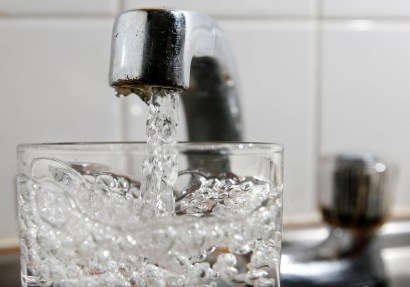
City water customers will be able to monitor their home or business's water usage online thanks to wireless water meters being installed as part of the mayor's Automated Meter Reading program.
The wireless meters, once installed, transmit data every six hours. The online service allows customers to view their usage anywhere from daily to monthly. City officials hope the system will help customers "identify ways to conserve water, reduce water bills and detect leaks," according to a statement on the program.
The Bronx was first to receive the service; starting yesterday, water customers whose homes and businesses have been installed with the wireless meters could go to the city's Department of Environmental Protection (DEP) website and -- with no extra charge -- sign up to receive notifications of their water use.
Queens is next, on July 26th, then Brooklyn, Manhattan, and Staten Island on August 9th, 23rd, and September 7th, respectively. Once completed, New York City will be the largest city in the world to use wireless water metering, the mayor's office says.
The meters' installation began in March 2009 and to date is 46 percent complete -- 380,000 of the city's 834,000 water customers now have the wireless units.The city estimates that all NYC water customers will have the meters by January 2012, taking into account an estimated 7,000 to 9,000 new customers added each week to the system.
"The Automated Meter Reading technology is a boon to water conservation across the City," said Council Member James F. Gennaro at Mayor Bloomberg's announcement Monday in City Hall. "In this rough economy, this technology is clearly something that makes both sense and cents."
Aside from helping customers reduce their bills, the city expects to save money as well. The wireless transmitters instantly report water usage, so the city no longer needs to contract ConEd to manually read water meters, saving approximately $3.6 million a year. Further, more accurate monitoring will lead to fewer disputes over bills, thus "more bills being paid sooner," the city said in a statement.
The total cost of the system's installation is $252 million, including the wireless transmitters on the water meters and the rooftop receivers which transmit the data back to the DEP.
"By providing information faster and more accurately, we're giving our customers the tools they need to make smart decisions about their water consumption," said DEP Commissioner Cas Holloway. "When people know more, they can save more ... Customer service is our top priority."
via nbcnewyork.com
Thursday, July 1, 2010
Water district lifts one-day-per-week water Citrus County
Water district lifts one-day-per-week water restrictions
The Southwest Florida Water Management District’s Governing Board voted today to let the modified Phase II water shortage restrictions expire on Wednesday.
Local governments will have the option of returning to the District’s twice-per-week, year-round water conservation measures starting July 1.
Click on the link at the end of this article to see the attached fact sheet for a summary of the new restrictions. However, some local governments may impose different schedules or retain stricter measures. Residents should check their local restrictions before changing their irrigation schedule.
The Governing Board voted to lift the restrictions in response to significant improvements in aquifer and river levels as a result of this winter’s above-average rainfall. Moreover, the region’s major public water suppliers have been able to capture and store large supplies of water to meet the needs of residents. However, the Board urged residents to continue the water conservation practices they’ve learned over the past three years.
“I want to commend the residents of the region for really stepping up to the plate to conserve water over the past three years,” said Ronald E. Oakley, Governing Board chair. “But we want to remind them that just because they may be able to water two days per week, doesn’t mean they need to. We can’t afford to be wasteful.”
Twice-per-week watering allows residents additional flexibility for determining when to water. Residents are encouraged to water only if their lawn and landscape needs it and turn off their irrigation system if it has rained or rain is predicted in the next 24 hours. Some of the signs that a lawn needs water include a blue-gray appearance, blades folded in half lengthwise and footprints remaining on the lawn for several minutes after walking on it.
The District declared a water shortage in January 2007. Seven counties were subject to additional Phase III restrictions in 2008 and 2009. Hillsborough, Pasco and Pinellas counties were briefly subject to the most aggressive Phase IV restrictions when public water supplies were critically low last spring.
via citrusdaily.com
Subscribe to:
Posts (Atom)